

Non-Specific Symptoms Pathway for Suspected Cancer
The Non-Specific Symptoms (NSS) Pathway provides a single urgent suspected cancer referral route for patients with concerning non-specific symptoms, where cancer is a possible diagnosis but the patient does not meet criteria for a site-specific Urgent Suspected Cancer pathway
This pathway runs alongside existing site-specific urgent cancer pathways and should only be used where no appropriate site-specific referral applies
Inclusion Criteria
Patients must have a clinical suspicion of cancer and meet one or more of the criteria below, without meeting site-specific referral criteria
Patients aged 40 years and over: Unexplained weight loss 5% documented over 3 months
Patients aged 40 years and over: Persistent constitutional symptoms for ≥4 weeks (one or more minimum for referral)-
- Unexplained decreased appetite
- Unexplained nausea and/or vomiting
- Unexplained fatigue
Patients aged 40 years and over: Progressive, unexplained, or worsening pain Persistent and unexplained pain such as vague abdominal pain, bone pain or progressive pain – please specify type of pain and location in clinical narrative
Adults aged 16 years and over: Abnormal imaging suggestive of metastatic disease with unknown primary
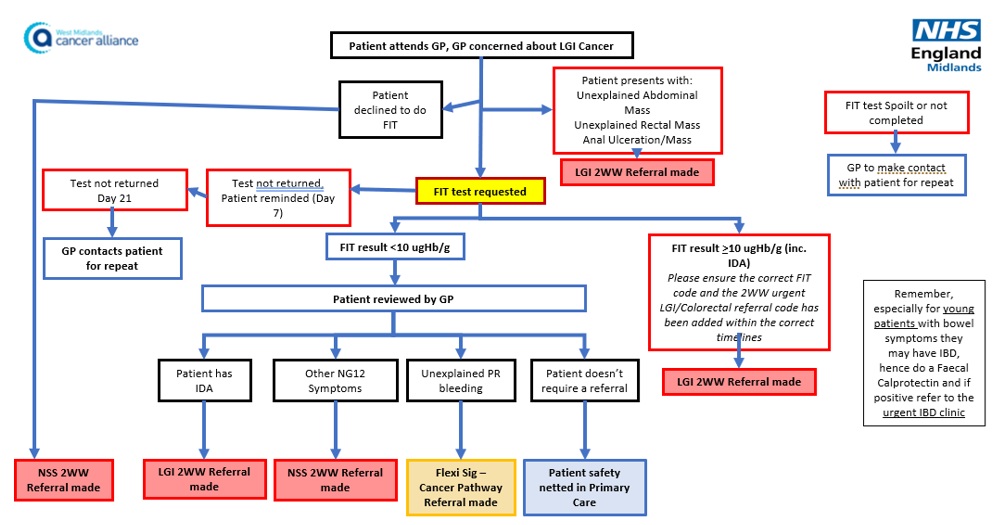
Adults aged 16 years and over – Primary care clinician gut instinct that cancer may be a possible diagnosis: consider for ongoing persistent change in bowel habit to looser stools with Negative FIT result (<10 µg Hb/g), or FIT declined / unable to be performed (see below)
Exclusions
- Acute medical emergencies including acute abdominal pain (e.g. suspected acute pancreatitis, aortic aneurysm), acute gastrointestinal bleed or suspected spinal cord compression
- Children under 16-years old (for paediatric pathway)
- No clinical suspicion of cancer
- No face-to-face clinical assessment performed
- Meets criteria for a site-specific cancer pathway
How to Refer
All referrals must be made via the NHS e-Referral Service (eRS) using the Urgent Suspected Cancer Non-Specific Symptoms referral form (see right). Is under General Internal Medicine
A clear clinical narrative is an important part of the referral and helps ensure timely and appropriate triage
Referrals without sufficient clinical information may be difficult to triage and could result in delays
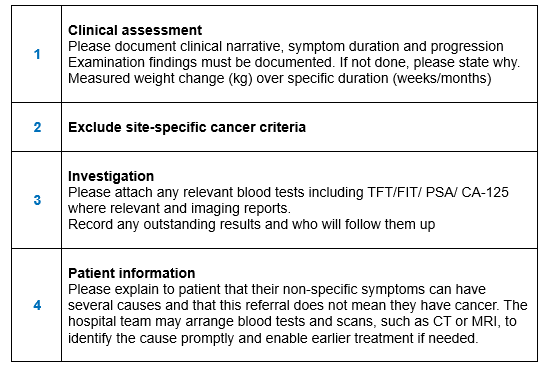
Referral Checklist
What Happens Next?
Referrals are clinically triaged to determine the most appropriate diagnostic approach
Patients may undergo targeted investigations or be redirected promptly to a site-specific pathway if indicated
Important Information for Patients
- Please inform the patient that this is an Urgent Suspected Cancer referral
- Provide urgent suspected cancer information (e.g. CRUK resources)
- Confirm availability and any access or communication needs at the point of referral
Contact Information
(For clinical advice only – not for routine referral queries)
George Eliot Hospital NHS Trust
Non-Specific Symptoms Pathway Team (via switchboard) 024 76 351 351
University Hospitals Coventry & Warwickshire NHS Trust
Cancer Services Team (via switchboard) 02476 964000
South Warwickshire University NHS Foundation Trust
Cancer Services Team (via switchboard) 01926 495321 Ext 8622/8690
 For review soon
 Awaiting review
 Invalid notification
 Coventry
 Rugby & South Warwickshire
 North Warwickshire
 South Warwickshire
Leave feedback
You must be logged in to post a comment.