

Spectrum of MASLD
MASLD develops in 4 main stages.
- Steatosis – a build-up of fat in the liver cells that may only be diagnosed during tests carried out for another reason
- Metabolic dysfunction-associated steatohepatitis (MASH, formally NASH) – a more serious form of NAFLD, where the liver has become inflamed
- Fibrosis – where persistent inflammation causes scar tissue around the liver and nearby blood vessels, but the liver is still able to function normally
- Cirrhosis – the most severe stage, occurring after years of inflammation, which can lead to liver failure. Ultimately this can result in MASH-related hepatocellular carcinoma (HCC)
It can take years for fibrosis or cirrhosis to develop. It’s important to make lifestyle changes to prevent the condition getting worse.
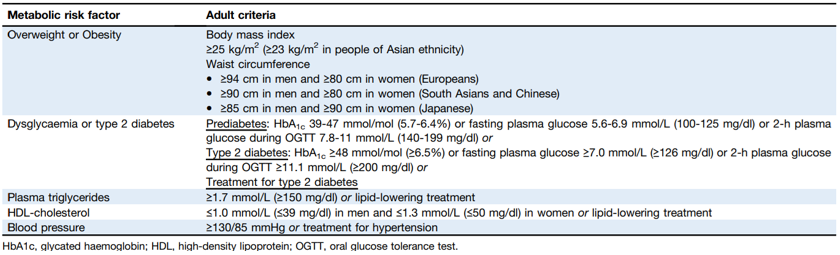
Cardiometabolic risk factors in definition of MASLD
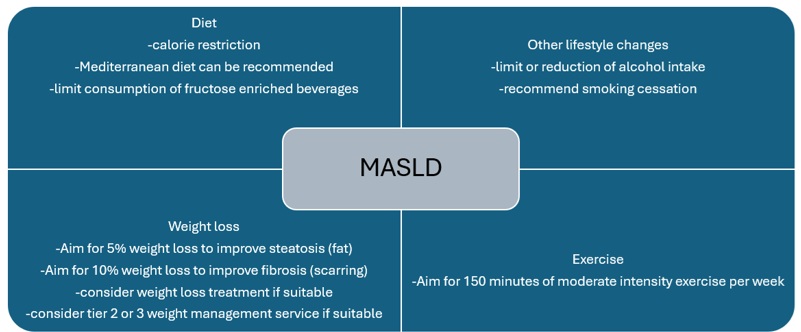
First line Management of MASLD
Primary Care Identification of Patients with NAFLD
FIB-4 Calculation
Fibrosis-4 (FIB-4) Index for Liver Fibrosis – Noninvasive estimate of liver scarring to assess the need for biopsy (see MDcalc FIB-4 Score)
- Nonalcoholic fatty liver disease (NAFLD) is now the leading cause of chronic liver disease in the world.
- Many NAFLD patients will have little progression in their disease, however a subset will progress to liver fibrosis and cirrhosis.
- Patients with NAFLD should have their fibrosis scores trended over time to evaluate for progression or stabilization.
- The NAFLD can reduce liver biopsies in those patients predicted to have a low risk of fibrosis by their score: “a liver biopsy to determine severity of fibrosis would be required in only 25% of patients with NAFLD, that is, those identified as ‘indeterminate’”
- Depending on score and local prevalence of advanced fibrosis, the score can be used to reliably predict (with high 80-low 90% accuracy) which patients are unlikely to have cellular evidence of fibrosis on biopsy.
FIB-4 was developed to correlate with Ishak levels of fibrosis (by biopsy) with 3 levels:
- 0-2 (mild fibrosis)
- 3-4 (moderate fibrosis)
- 5-6 (severe fibrosis/cirrhosis)\
While liver biopsy is the gold standard for the diagnosis of liver fibrosis, it is not ideal; biopsy only evaluates a minute portion of the liver itself, so sampling errors can occur. Liver biopsy also comes with substantial morbidity.

Referral to the UHCW Metabolic Fatty Liver Clinic for NAFLD
The Metabolic Fatty Liver Clinic run two clinic sessions per month with a Diabetologist and Nursing Team to see patients with NAFLD
The aim of the clinic is to formalise the care of NAFLD patients and to involve them in future clinical trials
Referral thresholds

 For review soon
 Awaiting review
 Invalid notification
 Coventry
 Rugby & South Warwickshire
 North Warwickshire
 South Warwickshire
Leave feedback
You must be logged in to post a comment.