

Appropriate Use of Prescribed Oral Nutritional Supplement (ONS) for Adults in the Community
This guideline sets out a recommended procedure for identifying and treating malnutrition in the community and ensuring Oral Nutritional Supplements (ONS) are prescribed appropriately in Coventry and Warwickshire and reflects advice current at the date of publishing
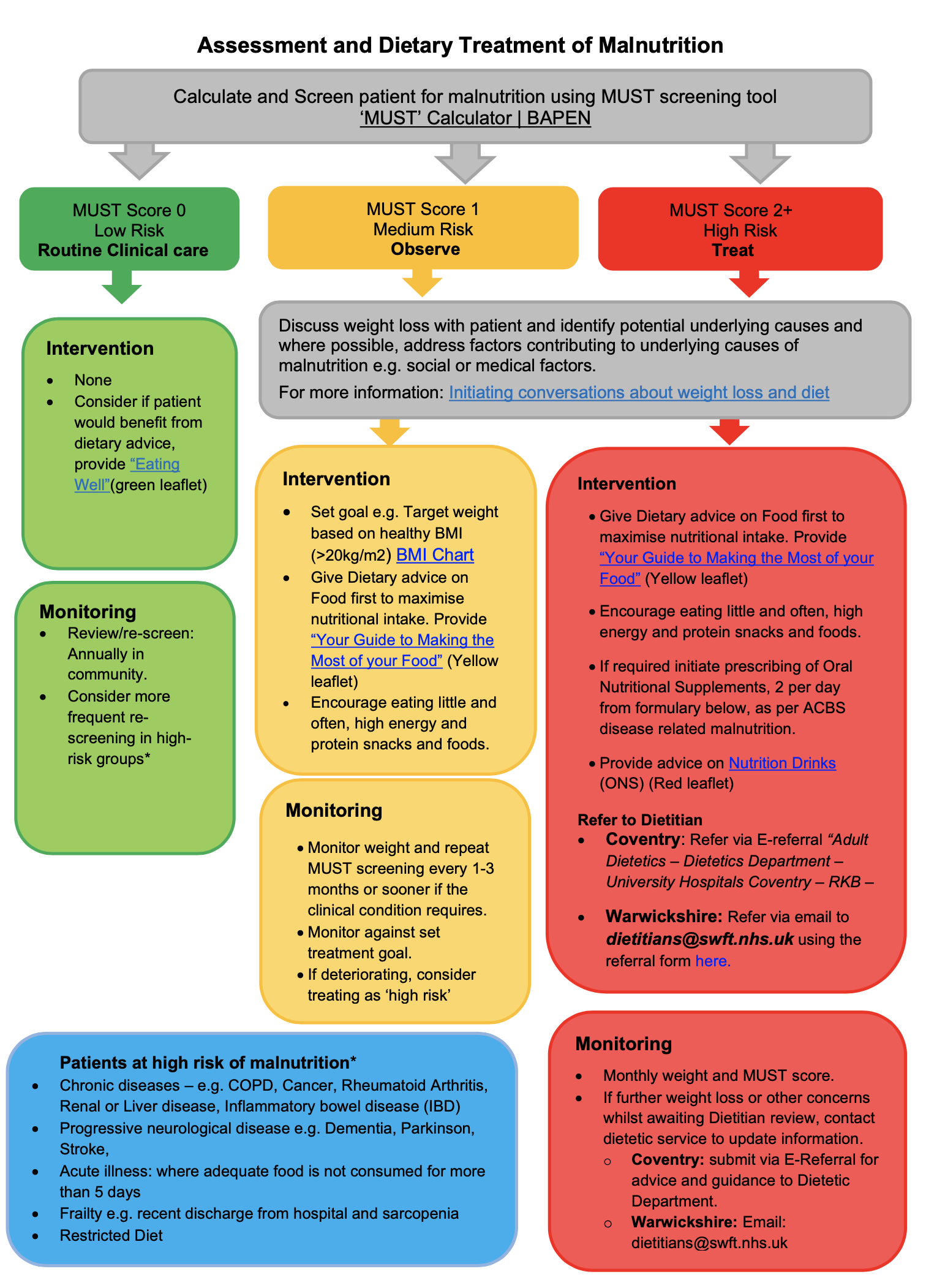
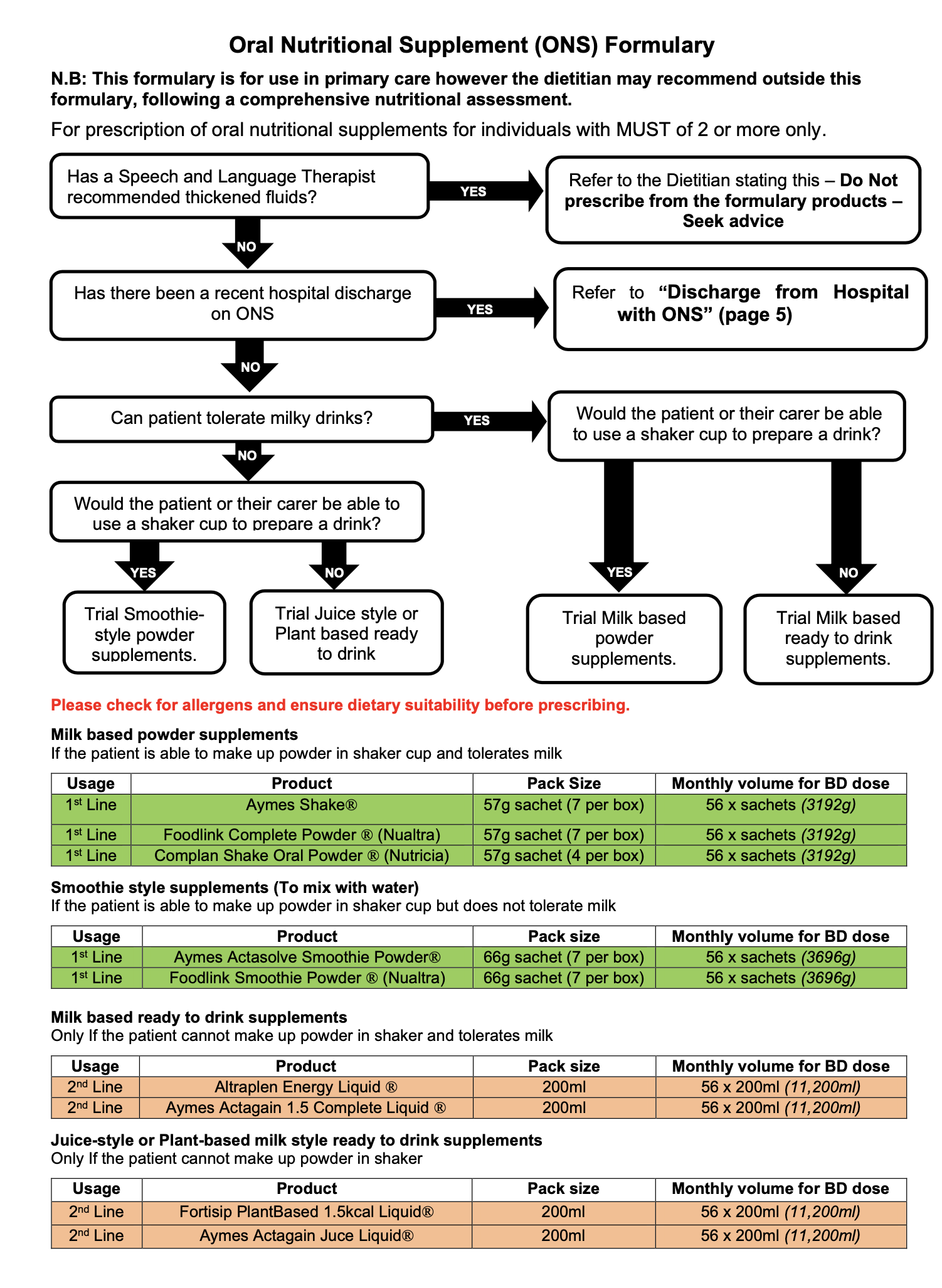
Prescribing tips
When ONS is prescribed, regular monitoring is needed to ensure:
- Nutritional requirements are being met
- Products are being taken as prescribed
- Prescribed supplements are still appropriate
- Always issue ONS with clear instructions (e.g. One to be taken twice a day between meals for one month until review) to support adherence
- Clinical benefits of ONS in the community are typically seen with 2-3 months of taking supplement. If there are no clinical benefits, consider other causes of weight loss and consider discontinuing or changing supplements
- Patient flavour preference should be considered to aid compliance.
- Ensure the prescribed product aligns with the patient’s allergies, intolerances, and cultural or dietary preferences. Where necessary, consult with a dietitian to ensure safe and effective nutritional support
Palliative Care
Prescribing ONS in palliative care requires consideration of the individual’s health and treatment
Nutritional management may change depending upon the stage of treatment:
- If the patient is terminally ill but death is not imminent:
• Nutrition screening and assessment should be carried out at regular intervals.
• Encourage nourishing foods and drinks as first line advice.
• ONS may be indicated if the patient continues to lose weight following dietary advice.
• ONS will only be of benefit if taken daily.
- If the patient’s condition is deteriorating and symptoms such as pain, nausea and poor appetite have worsened:
• Encourage foods and drinks that the patient enjoys maximising quality of life.
• Aggressive feeding may cause distress and anxiety.
• Nutrition screening and ONS will unlikely be of benefit however, ONS should be continued for comfort/care if requested.
- In the last days of life, the patient may be bedbound, weak, drowsy and have little desire for food or fluid
• Aim to keep the patient comfortable by offering mouth care and sips of fluid and/ or small mouthfuls of food as wanted/ managed
Dysphagia
Refer patients with dysphagia/ difficulties swallowing to the Speech and Language Therapy (SALT) department for assessment following the local referral procedure
Dysphagic patients requiring thickened fluids should be prescribed pre-thickened ONS. Thickening regular supplements is not recommended
The SALT and Dietitian can advise which product(s) are most appropriate for the patient
Enteral Feeding
Patients receiving nutrition via a feeding tube may use ONS in addition to or instead of feed packs
This will be issued by the managing dietitian and should not be prescribed in primary care
 For review soon
 Awaiting review
 Invalid notification
 Coventry
 Rugby & South Warwickshire
 North Warwickshire
 South Warwickshire
Leave feedback
You must be logged in to post a comment.